AI has changed how design gets made, and it isn’t going anywhere. Most studios now use it every day. It speeds up research, opens up early concepts, cleans up images and takes care of the repetitive production work that used to eat whole afternoons. A global survey of creatives by Envato found that almost half already use AI daily for client work, with daily use in the Middle East and Africa among the highest in the world.
So the question is no longer whether AI belongs in the design process. It does. The real question is what part of the process it belongs in, and who should be in charge of it.
A supercar needs a driver
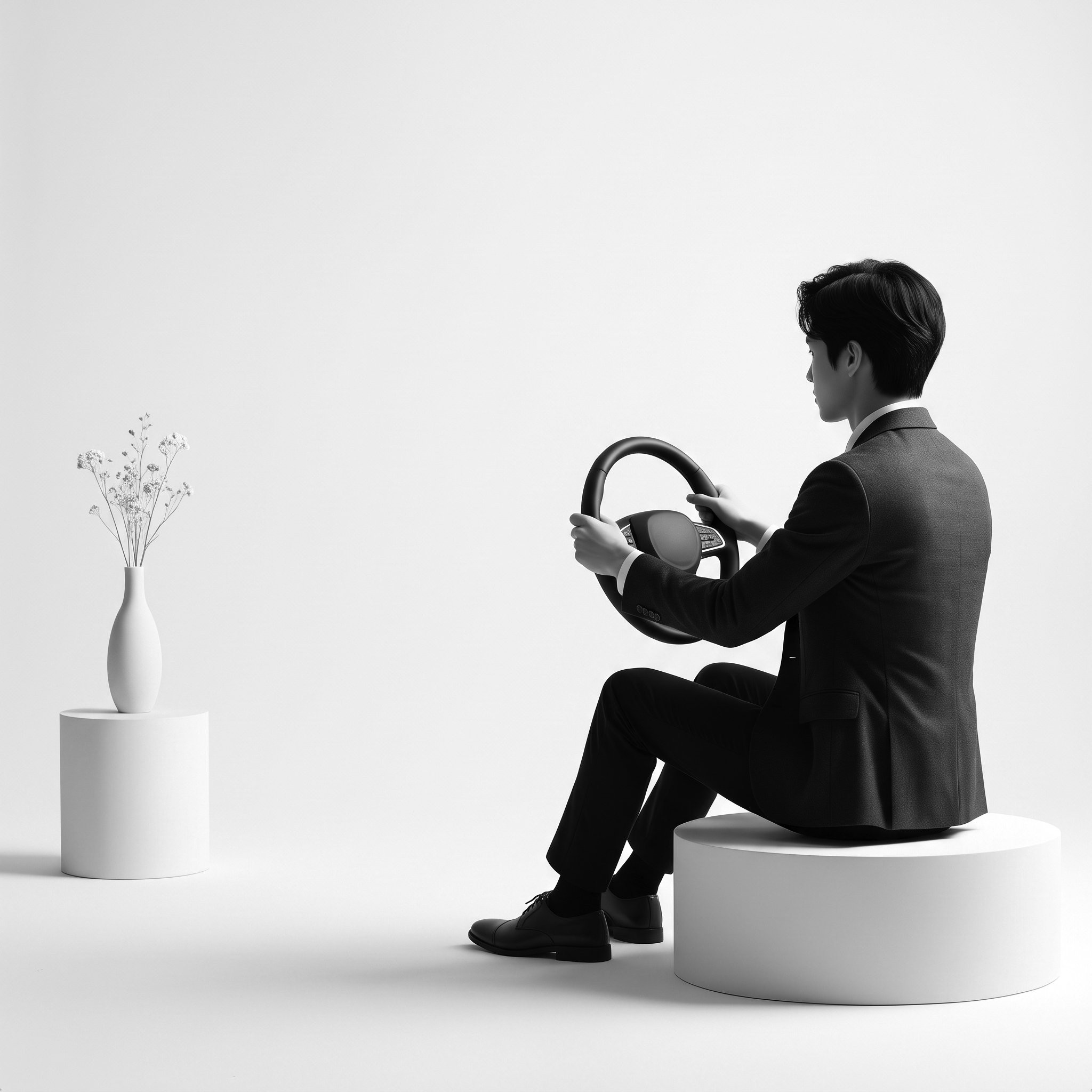
The best way to think about AI in design is as a very fast car. It can get you somewhere in a fraction of the time. It can produce a hundred directions before lunch. But speed is only useful if you know where you are going, and a car with nobody at the wheel tends to end up in a ditch.
That is where the human designer comes in. AI can move a project forward quickly, but it can’t decide where the project should go. Someone still has to read the brief properly, understand the business and the audience, and judge which of those hundred directions is actually right. Someone has to say no to the options that look impressive but say the wrong thing. That steering is the job, and it can’t be handed over to the machine on its own.
What AI still can’t do
AI is very good at producing things that look like design. It is far less good at producing things that mean something.
Art direction and creative direction are about decisions, not outputs. They connect a brand’s history, ambitions, market and culture into a single point of view, and then hold every piece of work to that point of view over months and years. AI doesn’t carry that context. It responds to prompts, one at a time, without a real sense of why a brand exists or what it is trying to become.
It also struggles with the layered side of design. Good branding is full of quiet choices:
- A colour that nods to a place or a heritage without shouting about it
- A typeface that feels confident without feeling cold
- A visual reference that local audiences will recognise and outsiders won’t misread
- A composition that leaves space for the brand to grow into
These choices carry meaning precisely because someone thought them through. AI can imitate the surface of them, but it rarely understands the reasons underneath. The result is work that looks fine at a glance and feels empty on a second look.
Clients are tired of doing it themselves
When generative tools first became widely available, many businesses decided to handle their own design. On paper it made sense. Why pay a studio when a tool can make a logo or a campaign visual in seconds?
In practice, a lot of those businesses have found the savings come with a cost. Someone in the team ends up spending hours writing prompts, comparing outputs, fixing hands and faces, rewriting garbled text and trying to make one image match the next. The marketing manager becomes an accidental art director without the training or the time to do it well. Decisions that should take one confident conversation with an expert turn into weeks of second-guessing.
This is why more clients are coming back to specialists. They don’t want to deal with the nitty gritty themselves. They want someone they trust to make the difficult calls on design, art direction and marketing, and to take responsibility for getting them right. The tools are cheap. Good judgement is not.
Audiences can tell
There is also a growing pushback against work that looks obviously AI-made. Audiences have seen enough of it now to spot the signs: the glossy sameness, the slightly too perfect lighting, the details that don’t quite hold together.
The research backs this up. A study by The Harris Poll with the 4As and Infillion, shared at Cannes Lions this year, found that 78% of consumers feel AI makes ads less genuine and 73% would be less likely to trust an ad they suspected was made with AI. A YouGov survey in Australia found 45% would trust a brand less if its ads were mainly AI-created.
For brands, that is a real risk. Trust takes years to build and a campaign that feels cheap or generic can chip away at it quickly. As a result, more businesses are actively seeking out work that is clearly made by people, with a recognisable point of view and a human hand behind it. Authenticity has become a selling point again.
The practical gap: just ask a printer
Beyond taste and trust, there is a very practical problem. Design has to work in the real world, and AI output often doesn’t.
Print shops have been dealing with this for a while now. Sign and print trade publications report a steady stream of AI-generated files that look sharp on a laptop but fall apart in production. Common issues include:
- Low resolution that breaks down when enlarged for banners, signage or vehicle graphics
- Odd dimensions that don’t match any real print size
- Missing bleed
- Flattened images where text, logos and backgrounds are fused into one layer
- Distorted or uneditable lettering
- Colours that shift badly when converted for print
Many printers simply send these files back. Someone then has to rebuild the work properly: redrawing logos as vectors, setting type correctly, preparing files at the right size and colour profile and making sure the design can adapt across print, screen, signage and social. That is skilled work, and it is exactly what a designer does.
A brand identity also has to live across dozens of formats for years. It needs a system, not a single striking image. AI can help generate ideas for that system, but building one that is consistent, flexible and production-ready still takes people who understand how design is actually used.
Part of the process, not a replacement
None of this is an argument against AI. Used well, it makes good designers faster and frees them to spend more time on the thinking that matters. It is a powerful part of the modern toolkit and studios that ignore it will fall behind.
But it is one part of the process. The ideas, the direction, the meaning and the craft that turns a concept into something real still come from people. AI can take you further and faster than ever before. It just can’t decide where you should be going.
The brands that do well over the next few years will be the ones that use AI for speed and rely on experienced creatives for judgement. The car keeps getting faster. That makes a good driver more valuable, not less.